Many women reach a point where they start thinking about restoring the youthful shape of their breasts, especially after milestones like pregnancy, breastfeeding, weight changes, or just the natural aging process. But not everyone feels comfortable with the idea of implants. Some don’t want extra volume, others don’t want to introduce something foreign into their body, and some simply prefer a more subtle, natural kind of enhancement.
That’s why the implant-free breast lift, also known as mastopexy has become such a popular choice. It focuses entirely on lifting, reshaping, and tightening what you already have, helping your breasts look firmer and more lifted without changing who you are.
What Exactly Is a Breast Lift Without Implants?
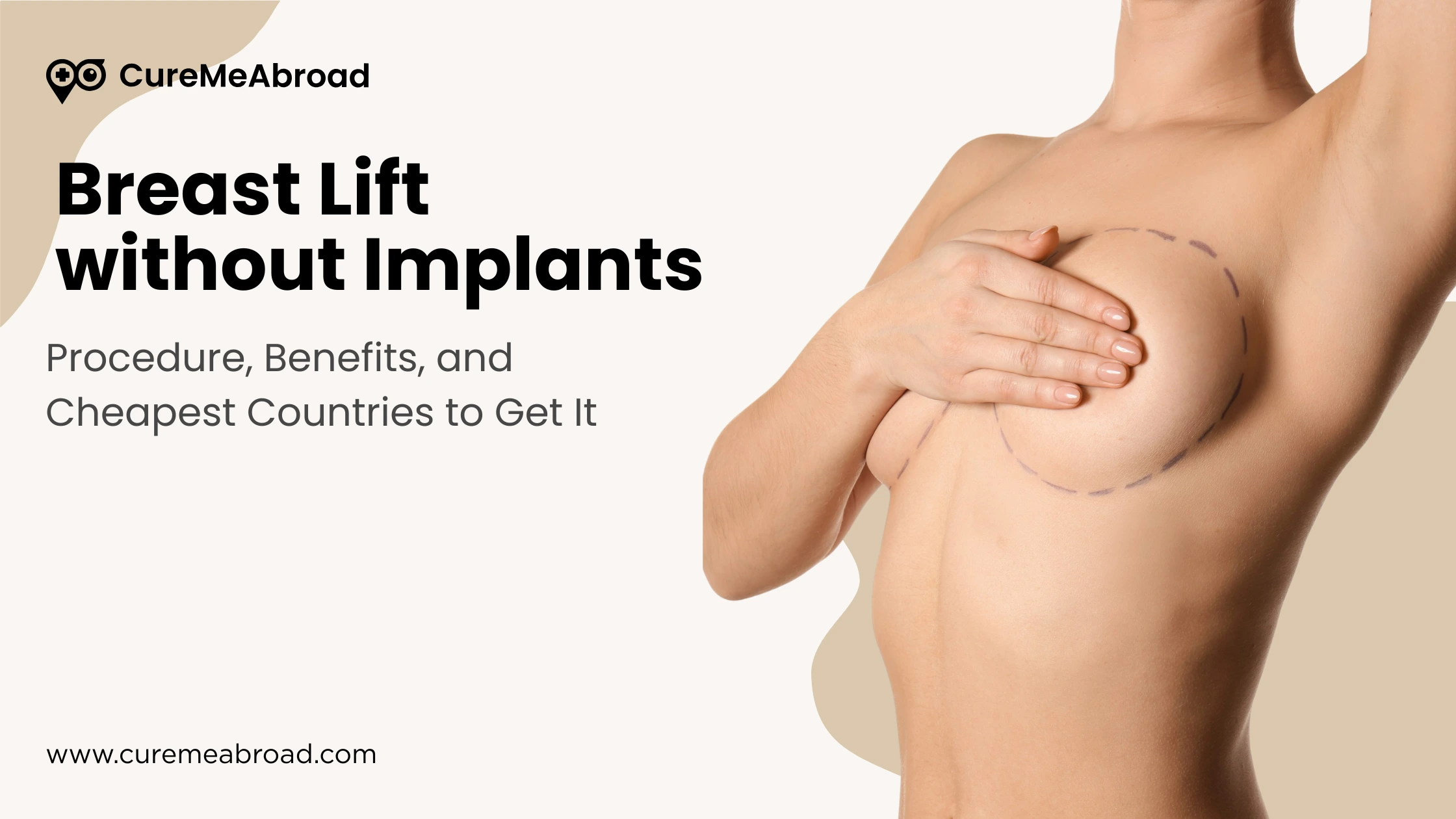
A breast lift without implants is a cosmetic surgery that focuses on repositioning and reshaping the breasts. Instead of adding volume, the goal is to restore a youthful contour by tackling sagging (often referred to as ptosis). Many women choose this procedure when they’re perfectly fine with their breast size but feel unhappy with how low their breasts have started to sit on their chest.
This sagging can be caused by many life experiences pregnancy stretches the skin, breastfeeding changes the tissue, weight loss deflates upper volume, and even genetics can play a role. A lift-only procedure helps bring everything back up to where it once was, making the breasts look perkier, rounder, and more supported while keeping their natural softness.
How a Breast Lift Works
During surgery, your plastic surgeon removes loose or stretched skin, tightens the remaining breast tissue, and lifts the whole breast mound to a higher position. The nipple and areola are also carefully repositioned to match the new breast shape, giving a more youthful and symmetrical appearance.
What’s nice about this approach is that the surgeon works with the tissue you already have. Instead of trying to create fullness with implants, the lift reshapes the existing tissue to create a naturally firm, elevated contour.
Depending on how much sagging you have, your surgeon will choose from several incision patterns. Some women need a very small incision only around the areola, while others may need vertical or horizontal incisions to achieve the desired lift. These choices are always tailored toward the most natural result possible.
Who Is a Good Candidate for a Lift-Only Procedure?
You might be a great candidate for a breast lift without implants if you:
- Are in good overall health and maintain a stable weight
- Don’t smoke, or are able to quit before surgery, so healing isn’t affected
- Are you satisfied with your breast size but bothered by sagging
- Notice that your nipples point downward or sit below the breast fold
- Have realistic expectations about what a lift can and cannot do
A lot of women think they need implants to “improve” their breasts, but that’s not always true. If you simply want everything back in its youthful place without increasing size, a lift alone can deliver beautiful and very natural results.
Why So Many Women Choose a Lift Without Implants
One of the biggest reasons women choose a non-implant breast lift is the desire for natural results. There’s something comforting about knowing that your breasts will still feel and behave like real breast tissue because they are real breast tissue.
Another major factor is avoiding long-term implant maintenance. Implants aren’t lifetime devicesthey may require replacement, monitoring, or additional procedures in the future. A lift, on the other hand, offers lasting results without the worry of capsular contracture, rupture, or implant malposition.
A lift also does an excellent job at improving nipple position and breast asymmetry. Many women even notice that their bras fit better afterward because the breasts sit higher and feel more supported.
Most Affordable Countries for a Breast Lift
Breast lifts can be expensive in places like the U.S. and the U.K., so many women explore medical tourism options. High-quality, board-certified plastic surgeons in other countries often offer the same procedure at a much more budget-friendly cost, especially when packaged with accommodation and aftercare.
Some of the most affordable and reputable destinations include:
- Turkey – extremely popular for cosmetic surgery, known for modern facilities and experienced surgeons
- Mexico – convenient for U.S. and Canadian patients, with many internationally accredited clinics
- Thailand – high medical standards, warm hospitality, and competitive prices
- Czech Republic – a trusted option within Europe for cosmetic procedures
Prices in these countries typically range from $2,500 to $6,000, depending on the clinic and surgeon. In comparison, the same surgery can easily cost $8,000 to $15,000+ in Western countries.
If you do travel for surgery, it’s important to check the surgeon’s credentials, the facility’s accreditation, and the safety protocols. A lower price should never come at the cost of quality.
Types of Breast Lift Techniques (Without Implants)
There isn’t just one way to perform a breast lift. The technique your surgeon chooses depends on how much sagging you have, how elastic your skin is, and what kind of final result you want.
Crescent Lift
This is the most minimal type, suitable for very light sagging. The surgeon removes a small crescent-shaped area of skin above the areola. It gives a tiny lift and very discreet scarring but isn’t strong enough for more noticeable sagging.
Donut / Periareolar Lift
Good for mild sagging. The surgeon makes two circular incisions around the areola and tightens the skin. The scar hides around the areola, which many women appreciate. However, it doesn’t offer dramatic reshaping.
Lollipop (Vertical) Lift
This is the most common technique for moderate sagging. The incision goes around the areola and vertically down to the breast fold. It allows for significant reshaping and a more lifted, rounded breast.
Anchor / Inverted-T Lift
Used for significant sagging or when there’s a lot of stretched skin. It includes the lollipop incisions plus one along the breast fold. This technique offers the most dramatic transformation but also the most visible scarring.
Minimal-Scar or “Scarless” Options
These include thread lifts, Renuvion/J-Plasma, or laser tightening. They can help with very mild skin laxity but they cannot reposition the nipple or remove loose skin. They are more of a maintenance tool, not a true lift.
Benefits of a Breast Lift Without Implants
Choosing a lift-only approach comes with a long list of advantages that many women find reassuring and appealing.
1. Natural Look and Feel
Because the lift reshapes your own tissue, the breasts look lifted but still soft and natural. There’s no sudden change in size and no risk of the “augmented look.” Many women appreciate that their breasts still move normally and feel comfortable.
2. No Implant-Related Issues
You completely eliminate risks like capsular contracture (tight scar tissue around the implant), implant rupture, rippling, or the rare but concerning BIA-ALCL. And since implants often need replacing after 10–15 years, avoiding them means avoiding future surgeries altogether.
3. Smoother and Simpler Recovery
Recovery from a lift alone is usually easier because there’s no implant pocket involved. Most patients feel up to light activities within one to two weeks. The chest also tends to feel more natural during the healing phase because there’s no foreign material settling into place.
4. Long-Lasting Shape Improvement
A breast lift isn’t just a surface change tightens the internal tissue and removes the stretched skin that was causing sagging in the first place. The results usually last many years, especially if your weight stays consistent and you wear supportive bras.
For women who dealt with skin irritation under the breast fold, the lift often solves this by lifting the tissue higher on the chest.
Risks and Safety Considerations for Mastopexy
Risks and Safety Considerations for a Breast Lift (Mastopexy)
If you’re thinking about getting a breast lift, you’re definitely not alone. It’s one of those procedures that a lot of women quietly wonder about for years before finally deciding to take the step. And honestly, it makes sense that our bodies change with time, weight shifts, pregnancy, breastfeeding, or sometimes just plain genetics. Wanting your breasts to sit a bit higher or look a bit firmer is a completely normal wish.
But before you go into surgery, it’s important to talk openly about something people often skim over: the risks. Not to scare you, but to prepare you. Knowing what to expect removes a huge amount of anxiety and helps you go into the experience feeling informed and grounded.
Let’s Talk Scarring: It’s Part of the Package, But Manageable
One of the first questions women usually ask is, “Will there be scars?” And yes, there will be. There’s no way to reshape and lift the breast without creating incisions. But the important thing to remember is this: scars mature, fade, soften, and become part of your skin’s natural pattern over time.
A breast lift can involve different incision patterns. You might hear your surgeon mention terms like Lollipop lift or Anchor lift, but these are just descriptions of where the scars will be. It might sound intimidating at first, but most scars settle extremely well.
Here’s what usually happens:
- Right after surgery: The scars look pinkish or slightly raised.
- Over the next few months, they begin to flatten and lighten.
- At around 12–18 months: They usually fade into thin, pale lines that are barely noticeable unless you look closely.
A lot of women are surprised by how discreet the final scars look. And honestly, the improvement in the breast shape often outweighs the concern. Your surgeon will give you very specific instructions, such as silicone tape or gel, breast massage, and keeping the scars protected from the sun. These little things feel tedious at times, but they make a big difference in how your scars settle long-term.
Changes in Sensation: Very Common and Usually Temporary
This is another topic that can make patients nervous, so let’s break it down gently.
After a breast lift, it’s extremely common to have:
- numbness
- tingling
- a slightly “dull” feeling
- or just a general sense that things feel different
That happens because the tiny nerves that supply the breast and nipple are stretched during surgery. They’re still intact; they just need time to wake back up. Most women find that their sensation slowly returns over a few months, sometimes taking up to a year.
Is it possible that sensation doesn’t fully return? Yes, but it’s less common. A very small percentage of women notice permanent changes. And interestingly, some women experience the opposite: increased nipple sensitivity. Bodies heal in their own unique ways. A good surgeon will always talk to you honestly about this, so you have realistic expectations.
Healing and Wound-Related Concerns
Let’s talk about the practical side of healing.
The truth is, most women heal without any major complications. But since this is surgery, it helps to know what could come up, not because it will happen, but so you can recognize it early if it does.
Infection
This is a risk with any surgery. You’ll likely go home with antibiotics to prevent it. Still, it’s important to keep an eye out for signs like:
- increasing redness
- warmth
- swelling
- unusual discharge
- fever
If anything feels off, you don’t wait; you call your surgeon. Early intervention is simple and effective.
Delayed Wound Healing
A few areas, especially where incisions meet (like the little corner where vertical and horizontal lines intersect in an anchor lift), can sometimes take a bit longer to close up.
If you smoke or vape nicotine, your risk for slow healing increases significantly. Nicotine restricts blood flow, and if the skin doesn’t get enough oxygen, wounds heal slowly or unevenly. Many surgeons won’t operate until nicotine is fully out of your system.
Asymmetry
No woman has perfectly symmetrical breasts even before surgery. A surgeon can improve symmetry beautifully, but complete mirror-like perfection isn’t realistic. Slight variations in shape, nipple height, or fullness can happen.
Most of the time, these small differences are subtle and don’t bother patients. But knowing about it beforehand prevents surprise later.
How Much Does a Breast Lift Cost Globally?
The cost of a breast lift (mastopexy) is one of the most variable aspects of the procedure, fluctuating dramatically based on geographic location and the complexity of the surgery. While in countries like the United States, the procedure can cost between $8,000 and $15,000 USD, destinations popular for medical tourism often offer the same procedure for $2,500 to $5,000 USD.
What Determines the Cost?
The final price is never a single, flat fee but rather a calculation influenced by several key factors:
Surgical Complexity: A simpler Crescent Lift costs significantly less than a complex Anchor Lift, which requires more time in the operating room and a higher level of surgical skill.
Geographic Location: The cost of living and general medical overhead in a country (e.g., facility staff wages, insurance, utilities) heavily dictate the price. A surgeon in a major metropolis will invariably charge more than one in a lower-cost area.
Anesthesia Type: General anesthesia requires a certified anesthesiologist and monitoring equipment, costing more than local anesthesia with light sedation.
Surgeon Qualification & Hospital Standards: Highly experienced, board-certified plastic surgeons with a reputation for excellent results will command higher fees. This premium is often considered an investment in safety and aesthetic outcome.
Facility Fees: The cost of the operating room (OR) and recovery suite is substantial. Having the procedure performed in an accredited surgical center or private hospital with state-of-the-art equipment and emergency protocols ensures a safer environment but adds to the cost.
Pre- and Post-operative Costs: This includes mandatory items like:
- Diagnostic Tests: Pre-surgery blood work, EKG, or mammogram.
- Medications: Post-surgery prescriptions for pain, swelling, and antibiotics.
- Support Garments: Surgical bras are required for compression during the initial recovery phase.
- Follow-up Visits: While often included locally, ensure follow-up care is factored into the total cost for medical tourism trips.
Cheapest Countries for Breast Lift (Safe & Popular Options)
Medical tourism offers a strategic way to access high-quality cosmetic surgery at a significantly reduced cost compared to Western nations. These countries have developed robust infrastructure and internationally accredited facilities to serve a global patient base, but thorough research remains paramount.
| Country | Average Mastopexy Cost (USD) | Key Attraction & Accreditation Focus |
|---|---|---|
| TURKEY | $2,500 – $4,500 | Very competitive package deals; high volume of procedures; focus on JCI (Joint Commission International) accredited hospitals. |
| INDIA | $1,500 – $3,500 | Extremely low cost of living, leading to the lowest overheads; many surgeons trained internationally. |
| MEXICO | $3,500 – $5,500 | Geographical proximity for US patients; many clinics near the border (Tijuana, Cancun) with US-trained surgeons |
| THAILAND | $3,000 – $5,500 | Renowned for exceptional patient care and hospitality, a high number of JCI-accredited hospitals, especially in Bangkok |
| POLAND | $2,800 – $4,000 | High-quality standards within the EU, transparent pricing, and modern facilities |
| COLOMBIA | $3,000 – $5,000 | Highly regarded South American hub for cosmetic surgery; well-trained, specialized surgeons. |
| TUNISIA | $3,500 – $5,000 | Popular for European and North African patients; packages often include luxurious recovery stays. |
Country-Specific Insights
Turkey
Turkey is a global leader in medical tourism. Clinics, particularly in Istanbul and Antalya, offer all-inclusive packages that cover the surgery, accommodation, and airport transfers, making the logistics seamless for international patients. While prices are highly competitive, ensure your chosen clinic has JCI accreditation for peace of mind.
Mexico
A favored destination, especially for patients from the US, due to easy travel. While prices are substantially lower than domestic US rates, research is critical. Focus your search on surgeons certified by the Mexican Board of Plastic, Aesthetic, and Reconstructive Surgery (CMCPER).
Thailand
Known for world-class, five-star medical facilities and exceptional service. Thai hospitals often operate with very stringent safety standards and high-tech equipment. It offers a great balance of cost, quality, and the opportunity for a serene, beautiful recovery experience.
India
Often offers the lowest costs due to low operational overhead. India has a large pool of highly skilled, often foreign-trained, plastic surgeons. Safety should be verified by checking for NABH (National Accreditation Board for Hospitals & Healthcare Providers) or JCI accreditation.
Colombia
Cities like Medellín and Bogotá have gained international recognition for their talented plastic surgeons. The country is known for specialized, high-volume cosmetic procedures. Verify your surgeon's credentials with the Colombian Society of Plastic, Aesthetic, and Reconstructive Surgery (SCCP).
Poland
A rising European medical tourism hub, Poland offers high-quality medical services at lower EU prices. The infrastructure is modern, and many surgeons adhere to European standards of training and safety, making it a reliable option for European patients.
Tunisia
Primarily caters to European patients seeking competitive prices paired with holiday destinations. Prices are very competitive, but always confirm the surgeon's training and the accreditation status of the hospital facility.
The primary difference between high-cost and low-cost packages is often the inclusivity.
- Standard Local Quote (High-Cost Countries): Typically covers the surgeon's fee, facility/OR fee, and anesthesia fee. You often pay separately for prescription medication, compression garments, and some pre-op tests.
Medical Tourism Package (Lower-Cost Countries): Often Includes the Surgery Fees Plus:
- Pre-operative consultations and tests.
- Hospital stay (if required).
- Accommodation in a recovery house or hotel for several days.
- Ground transportation (airport pickup/drop-off).
- A post-operative check-up before departure.
How Much Does a Breast Lift Cost Around the World?
Talking about cost can feel uncomfortable, but it’s an important part of planning.
What surprises most people is how dramatically the price varies depending on where you get the surgery. In countries like the U.S., a breast lift can cost anywhere from $8,000 to $15,000 USD. Meanwhile, in places known for medical tourism, the same procedure performed by trained, reputable surgeons may cost between $2,500 and $5,000 USD.
This huge difference doesn’t automatically mean quality is lower in countries offering more affordable prices. Often, it’s simply due to:
- lower cost of living
- cheaper facility and staff expenses
- different insurance or licensing systems
- currency differences
The key is choosing the right country and the right surgeon, not just the lowest price.
What Factors Actually Influence the Cost?
1. The Complexity of the Surgery
Not all breast lifts are the same. Some involve small adjustments and shorter incisions, while others involve more reshaping and longer operating time. An anchor lift, for example, requires more technique and time than a crescent lift, which naturally increases the cost.
2. Geographic Location
A breast lift performed in Beverly Hills or London will inevitably cost more than the same procedure in Mexico City or Istanbul. And it’s not because the surgeons abroad are less skilled—it’s because overhead costs differ drastically.
3. Type of Anesthesia
General anesthesia involves a trained anesthesiologist, special monitoring machines, and a recovery team. All of this adds to the price. Local anesthesia with light sedation is less expensive, but it isn’t suitable for every procedure or patient.
4. Surgeon’s Experience and Reputation
This is one area where it makes sense to invest. A highly experienced, board-certified plastic surgeon with proven results charges more because you’re paying for:
- safer surgery
- fewer complications
- better aesthetic outcomes
You’re not paying for “fancy branding,” you’re paying for years of training and consistent results.
5. Surgical Facility Fees
Accredited hospitals or surgical centers cost more because they follow strict international safety standards. This covers things like:
- emergency equipment
- sterilization standards
- trained staff
- post-op care protocols
It’s similar to choosing a safe, well-maintained hotel versus a budget place that looks “just okay.” You want the one that’s prepared for anything.
6. Additional Pre- and Post-Op Expenses
Many people don’t realize how much the surrounding care contributes to the total cost. You’re likely to pay for:
- blood tests
- imaging (sometimes a mammogram)
- pain medication
- antibiotics
- anti-swelling medication
- surgical bras
- follow-up appointments
If you’re traveling abroad, there are extra considerations:
- accommodation
- transportation
- someone to accompany you
- extra days to stay in the country
A breast lift is not something you want to rush—flying too soon after surgery can increase risks.
How to Choose the Right Country for Your Breast Lift
Choosing the right country for your breast lift is a bit like planning a major life event—you want it to be memorable for the best reasons, not because something went wrong. And while saving money can be a huge motivation, it should never overshadow your safety or the quality of the final result. A breast lift is still major surgery, and taking the time to vet the country, clinic, and surgeon can make all the difference in both your outcome and your peace of mind. Think of this as doing your homework so you can enjoy the journey with much more confidence.
Accreditation of Clinics
One of the first things to look at before prices, before photos, before anything is whether the clinic itself meets internationally recognized standards. Accreditation is like an external stamp of approval that tells you a facility has been checked and re-checked for quality, cleanliness, safety protocols, and patient care.
Joint Commission International (JCI)
If a clinic has JCI accreditation, that’s usually a very reassuring sign. It means the facility has gone through a rigorous evaluation and has proven that it can deliver care that aligns with global safety standards. Think of JCI as the global gold medal of hospital accreditation.
National Certifications
Different countries also have their own highly respected accreditation systems. For example, in India, you might look for NABH certification, which is extremely reputable. Most countries have their own version of a national health accreditation board, and seeing these certifications tells you that the clinic is held to strict internal standards as well.
Surgeon Credentials
Once you feel confident in the clinic itself, the next essential step is vetting the surgeon. The person performing your procedure plays the biggest role in your final results, so you want to be sure you’re choosing someone with extensive training, experience, and integrity.
Board Certification
Every country has at least one officially recognized plastic surgery board. In Colombia, this might be the SCCP; in Mexico, the CMCPER. These certifications are not just fancy titles—they reflect years of specialized training, examinations, and ongoing education.
Experience & Specialization
Not every plastic surgeon performs mastopexies frequently. Ideally, you want someone who specializes in breast procedures and can show you a variety of before-and-after examples for patients with similar breast shapes and goals. The more cases they’ve done, the more refined their technique tends to be.
Safety & Post-Op Care Standards
Your surgery is just one part of the experience. What happens after surgery is equally important. A well-trained staff and a solid follow-up plan can catch complications early and help you heal smoothly.
Emergency Protocols
Even though complications are uncommon, the facility should be prepared for them. This includes having an ICU, emergency medications, and a trained staff that knows exactly what to do if something unexpected happens.
Language Barrier
Clear communication isn’t optional in medical care, it’s essential. Make sure your surgeon and supporting team speak English (or your language) well enough that you can comfortably describe symptoms or ask questions.
Follow-Up Plan
A thoughtful surgeon won’t send you home without a clear plan. Ask how many days of follow-ups they include, and how they handle remote communication once you’ve returned home.
Travel + Recovery Considerations
Your journey doesn’t begin and end in the operating room. Travel plans, climate, comfort, and the length of your stay can all influence how smoothly you recover.
Length of Stay
Most patients need around 7–14 days in the country after surgery. Flying too soon is not advisable, not only because of pressure changes but also because complications tend to show up in the first week.
Comfort
Recovering in a quiet, comfortable environment does wonders for your healing. Sometimes the slightly more expensive option is worth it if it means a safer or more peaceful experience.
Before and After: What Results Can You Expect?
A breast lift can feel almost magical in how dramatically it changes the appearance of the breasts. Sagging is corrected, the nipples are repositioned, and overall, the chest looks more youthful and refreshed. But like with any procedure, it helps to go in with balanced, realistic expectations.
Realistic Expectations: A mastopexy changes shape, not volume.
What It Achieves:
You’ll see your breasts lifted, firmer, and more symmetrical. Your nipple-areola complex will sit higher, and the overall contour will look more youthful.
What It Does Not Achieve:
A lift doesn’t add volume. In fact, some people feel their breasts look slightly smaller afterward, simply because the extra skin that used to give the appearance of fullness is removed. If you want both a lift and more fullness at the top of the breast, you may need fat transfer or implants.
Healing Timeline
You’ll see the lift immediately, but swelling and settling take time. Your breasts may look slightly high or tight at first, but over the next few months, they soften into their final shape. Scars will also lighten and flatten gradually.
How Long Do the Results Last
A breast lift is long-lasting, but like all cosmetic procedures, it cannot permanently freeze time.
Average Duration
Most people enjoy their results for 10 to 15 years. Over that time, natural aging continues, and gradual sagging can happen again, but usually not to the same extent as before.Natural Changes
Gravity, skin elasticity, and lifestyle all play roles. Even the best surgery cannot eliminate these natural forces.Revision
Some women choose a minor revision after a decade or more. This is not mandatory but can help maintain a fresher appearance.
Factors That Affect Longevity
Your everyday habits matter more than many people realize.
- Weight Stability: Frequent fluctuations stretch the skin and tissues.
- Pregnancy & Breastfeeding: Both can dramatically change the breast’s shape.
- Supportive Bras: This helps preserve the lift long-term.
- Skin Quality: Smoking is particularly harmful because it reduces elasticity and slows healing.
What to Expect During the Procedure
Knowing what happens in the operating room can help take away much of the anxiety. A breast lift is a carefully choreographed procedure to reshape and elevate the breast in a safe, controlled way.
Step-by-Step Surgery Process
Anesthesia Administration
Either general anesthesia or deep sedation is used.Incision Placement
The method (Crescent, Donut, Lollipop, or Anchor) depends on how much lifting you need.Reshaping the Breast
The surgeon lifts and sculpts the internal tissue to create a firmer breast mound.Nipple-Areola Repositioning
The nipple is moved to a higher, natural position and reshaped if needed.Excess Skin Removal & Closure
Loose skin is removed, and the breast is tightened.Bandaging
A compression bra keeps swelling down and supports your new shape.
Anesthesia & Operating Time
Most surgeries last 2 to 3 hours, depending on the lift technique. Crescent and Donut lifts are usually quicker; Anchor lifts take longer because they involve more steps.
Post-Op Care
You’ll go home the same day but will need someone with you for at least the first night.
Recovery Timeline
While you often feel much better after a few days, full recovery and the maturation of results take time.
- Week 1 | Most pain, swelling, and bruising. Incisions are heavily bandaged. Crucial rest period. No lifting over 5 lbs. Light walking only.
- Week 2 | Discomfort significantly decreases. Stitches (if non-dissolvable) may be removed. Most patients return to light desk work and their daily routine. No strenuous activity.
- Weeks 3–4 | Swelling continues to subside. Breasts start to settle into their new shape. Light exercise (walking) can usually be resumed. Avoid high-impact exercise.
- Weeks 6–8 | Most restrictions are lifted, with surgeon clearance. Return to full exercise routine, including cardio and lifting.
- Months 6–12 | Final breast shape and projection are achieved. Scars begin to mature and fade. The final result is visible. Continue scar care regimen.
Tips to Save Money While Staying Safe
Medical tourism can offer significant savings, but the goal is to save safely, not recklessly. Here are strategies that balance budget with safety.
All-Inclusive Packages
Packages simplify the entire experience by bundling major costs.Financial Clarity:
You avoid unexpected add-ons for anesthesia, labs, or hotel transport.Logistical Ease:
Having accommodation and transportation included reduces stress, which is especially helpful after surgery.Negotiation:
Some clinics allow package customization, which can save even more.Off-Season Medical Tourism
Choosing less busy travel periods can cut costs without affecting the quality of care.Cheaper Flights & Hotels:
Prices drop dramatically in off-peak seasons.Surgeon Availability:
You may have more scheduling options.Comfort:
Milder weather can make recovery easier.Clinic Reputation > Low Cost
The best “deal” is one that combines excellent safety with fair pricing. Avoid chasing the cheapest option blindly.Hidden Costs of Failure:
Revisions and complications can become very expensive.Accreditation Matters:
Invest in a well-reviewed, accredited clinic with a strong track record.
FAQ: Breast Lift Without Implants & Costs Abroad
Is a breast lift cheaper than breast implants?
Generally, a breast lift (mastopexy) is more expensive than breast augmentation (implants) alone when performed in Western countries (like the US or UK).
- Implants Alone: Typically requires less surgical time and fewer complex incisions, making the surgeon's fee lower.
- Mastopexy Alone: Requires extensive reshaping, tissue manipulation, and removal of excess skin, demanding more surgical skill and time, leading to a higher fee.
- Combined Procedure: A combined breast lift and augmentation (implant) procedure is the most costly, as it incorporates the complexities of both surgeries.
However, in medical tourism destinations, the price difference might be less pronounced due to the highly competitive nature of the market.
Can a breast lift be done with fat transfer instead of implants?
Yes, absolutely. This combination, often called Augmentation Mastopexy with Fat Grafting, is popular for patients who want a modest increase in volume alongside their lift, but without implants.
- Process: Fat is harvested from another area of the body (e.g., abdomen or flanks) via liposuction, purified, and then strategically injected into the breasts.
- Benefit: This provides a natural volume boost and can enhance cleavage, using only your own tissue. It is best suited for patients needing a subtle volume increase, as results are limited by the amount of fat available and the percentage that survives the transfer.
How long do breast lift results last?
The results of a mastopexy are long-lasting, but not permanent. The procedure corrects the current sagging, but it cannot stop the natural process of aging.
- Duration: Most patients enjoy excellent results for 10 to 15 years.
- Factors Affecting Longevity:
- Major weight fluctuations.
- Future pregnancies and breastfeeding.
- Smoking (which compromises skin elasticity).
- Failure to wear supportive bras (especially during exercise).
Which country is the safest and cheapest for breast lift surgery?
There is no single country that is universally the "safest and cheapest." Safety relies less on the country itself and more on the individual facility and surgeon.
- Safety Priority: Always prioritize clinics with JCI (Joint Commission International) accreditation and surgeons who are Board Certified by a recognized national authority. These facilities exist in every popular medical tourism destination (Turkey, Mexico, Thailand, etc.).
- Cheapest: Generally, countries like India and sometimes Turkey offer the lowest starting prices due to low labor and overhead costs.
- Best Value (Safety + Cost): Countries like Turkey, Mexico, and Thailand often provide the best overall combination of modern, highly accredited facilities and competitive pricing.
What BMI is required for a breast lift?
Surgeons typically require patients to be within a healthy weight range, which is usually defined by a BMI (Body Mass Index) of 30 or lower.
- Why BMI Matters: Having a BMI over 30 increases the risks associated with surgery (e.g., anesthesia complications, infection, and blood clots) and can negatively impact wound healing.
- Optimal Results: Furthermore, maintaining a healthy, stable weight before and after the surgery is crucial for ensuring the longevity of your lifted results. If you plan to lose a significant amount of weight, most surgeons recommend doing so before your mastopexy.