
When it comes to lung cancer, one of the most important factors that guides treatment and outlook is understanding its stage. The stages of lung cancer simply refer to how advanced the disease is and whether or not it has spread to other parts of the body. Knowing these stages helps doctors create a tailored treatment plan and gives patients and families clarity about what lies ahead.
In this blog, we’ll walk you through the step-by-step process from diagnosis to treatment options while keeping things simple and relatable.
Why Staging Matters
Think of staging as mapping out where the cancer is at the time it’s discovered. For example, is it limited to a small area in the lungs, or has it traveled to other organs? This is incredibly important because each stage requires a different approach. An early-stage lung cancer may be treatable with surgery, while advanced stages might need chemotherapy, radiation, or newer targeted therapies.
How Doctors Diagnose Lung Cancer
Diagnosis is the first step before doctors even determine the stages. A variety of tests are carried out to confirm the presence of lung cancer and to understand its nature. Here are common diagnostic tools used:
| Diagnostic Test | Purpose |
|---|---|
| CT Scan or MRI | Produces detailed images of the lungs and surrounding tissues |
| PET Scan | Finds out if cancer has spread beyond the lungs |
| Bronchoscopy | Directly looks inside the lung’s airways |
| Biopsy | Examines lung tissue under a microscope for cancer cells |
| Blood Tests | Provides supportive insights on overall health status |
Once doctors collect this information, they use it to classify cancer into specific stages.
The Four Main Stages of Lung Cancer
There are two major types of lung cancer: non-small cell lung cancer (NSCLC) and small cell lung cancer (SCLC). NSCLC accounts for nearly 85% of cases, and its staging is more detailed. SCLC, on the other hand, is usually classified into just two categories: limited stage and extensive stage.
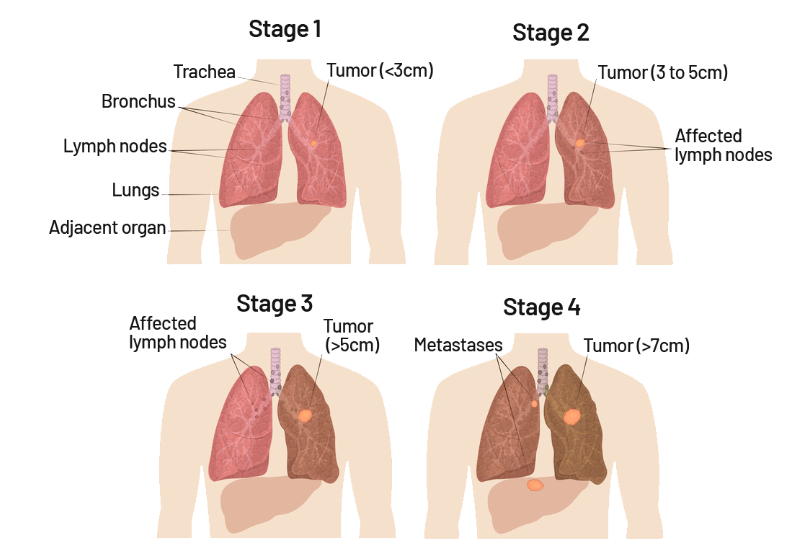
For simplicity, let’s focus first on the NSCLC staging system (Stage 0–4).
| Stage | Description | Common Treatment Options |
|---|---|---|
| Stage 0 | Cancer is only in the lining of the airway (very earliest form). | Surgery to remove affected tissue |
| Stage I | Localized in one lung but has not spread beyond it. | Surgery, sometimes followed by chemotherapy |
| Stage II | Cancer has spread to lymph nodes near the lung. | Surgery + chemotherapy or radiation |
| Stage III | Cancer has spread more extensively within the chest (to lymph nodes). | Combination of chemotherapy, radiation, surgery |
| Stage IV | Cancer has spread to other organs such as the brain, bones, or liver. | Targeted therapy, immunotherapy, chemotherapy |
These stages of lung cancer guide what kind of treatment is appropriate. For example, a Stage I patient could see long-term survival with surgery, while a Stage IV patient may need ongoing systemic therapies to manage the disease.
Small Cell Lung Cancer Stages
As mentioned earlier, small cell lung cancer (SCLC) is generally more aggressive, so staging is simplified:
| Stage | Explanation | Typical Treatment Options |
|---|---|---|
| Limited Stage | Cancer is confined to one side of the chest. | Chemotherapy + radiation |
| Extensive Stage | Cancer has spread widely (both lungs or other body areas). | Chemotherapy, immunotherapy |
Because SCLC progresses quickly, early detection makes a huge difference.
Factors That Influence Staging
Doctors don’t just look at tumor size or location when identifying the stages of lung cancer. They also consider:
- Tumor Size (T): How large is the growth in the lung?
- Node Involvement (N): Has the cancer spread to the nearby lymph nodes?
- Metastasis (M): Has it spread to distant organs?
This is called the TNM system, and it’s used worldwide for lung cancer staging. For example, “T1N0M0” means a small tumor, no lymph nodes affected, and no spread to other organs.
Common Treatment Options by Stage
Once doctors determine the stage, they build a treatment plan that balances effectiveness, side effects, and the patient’s overall health.
| Stage | Main Approach |
|---|---|
| Stage 0–I | Surgery is often curative if the patient is healthy enough. |
| Stage II | Surgery plus chemotherapy or radiation, depending on spread. |
| Stage III | Combination of therapies (chemo + radiation, sometimes surgery). |
| Stage IV | Targeted therapy, immunotherapy, or chemotherapy to control spread. |
Emerging Therapies
Modern medicine is making exciting progress in treating advanced stages of lung cancer. A few promising approaches include:
- Immunotherapy: Helps the immune system recognize and fight cancer cells.
- Targeted Therapy: Uses drugs that attack cancer with specific mutations (like EGFR or ALK).
- Minimally Invasive Surgery: Newer techniques reduce recovery time.
- Personalized Medicine: Treatment is increasingly based on genetic testing of tumors.
These approaches have improved the outlook for many patients, especially those in Stage IV, and bring new hope.
Living with Lung Cancer
Receiving a diagnosis can feel overwhelming, but it’s important to remember that treatment has improved tremendously over the years. Many patients live longer, fuller lives even with later stages. Some coping strategies include:
- Building a strong support network of family, friends, and healthcare professionals.
- Learning about treatment side effects and ways to manage them.
- Making lifestyle changes, such as quitting smoking and adopting a healthy diet.
- Exploring patient support groups that connect people with similar journeys.
Outlook and Hope for the Future
Doctors are now able to identify cancer earlier than before, thanks to advanced imaging and genetic research. Ongoing studies are focusing on vaccines, new immunotherapies, and even blood-based cancer detection tests. All these tools may one day make lung cancer not just treatable but manageable like a chronic condition.
The journey through the stages of lung cancer is deeply personal. Each individual’s experience is unique, but with early detection, personalized treatment plans, and emotional support, there is genuine hope.
Final Thoughts
Understanding the stages of lung cancer can help you or your loved ones feel more in control of the journey. While the word “cancer” can sound frightening, staging gives doctors the roadmap they need to fight back effectively. With the right mix of medical intervention, support, and hope, patients can navigate this path with courage.